
Last reviewed: October 2026
The best marketing campaigns for small business are short, single-goal pushes: one audience, one offer, one or two channels, a deadline and one number that tells you whether it worked. Pick the goal first (new leads, reactivation, reviews, referrals, local awareness or a seasonal spike), then choose a campaign built for that goal. Most small businesses get faster results from past customers and reviews than from cold advertising.
Below are 33 small business marketing campaign ideas grouped by goal, each with a channel, cost level and KPI, plus a six-step launch process, a 90-day calendar and a one-page brief template.
What makes good marketing campaigns for small business?
A good small business campaign has a single measurable goal, a defined audience, a specific offer, a fixed start and end date, and a budget you track against revenue. Ongoing activity, like posting on social media, is not a campaign. A campaign is a time-boxed test you can judge as a win or a loss.
The U.S. Small Business Administration’s marketing guidance makes the same point in plainer terms: keep a complete breakdown of costs, keep tracking them once the plan is live, and compare marketing and sales costs to the revenue they generate so you know whether you got a positive return.
Every idea below uses three labels:
- Channel: where the campaign runs.
- Cost level: Low means mostly your time. Medium means some print, software or ad spend. High means meaningful paid media or event costs.
- KPI: the one number you judge it on, chosen before launch.
Small business marketing campaign ideas at a glance
Match the campaign to your bottleneck. If the phone is quiet, run a lead campaign. If you have a big past customer list, run reactivation first because it is usually cheaper. If prospects find you but do not call, fix reviews. The table below shows the best first campaign for each goal and how fast you can expect a signal.
| Goal | Best first campaign | Main channel | Cost level | Primary KPI | Time to first signal |
|---|---|---|---|---|---|
| New leads | Free assessment offer | Website + email + search | Low to Medium | Booked assessments | 2 to 4 weeks |
| Reactivation | “We miss you” win-back sequence | Email + phone | Low | Reactivated customers | 1 to 2 weeks |
| Reviews | Point-of-delivery review request | Google Business Profile, QR code, email | Low | New reviews per month | 1 to 2 weeks |
| Referrals | Thank-you referral program | Email + in person | Low | Referred leads | 4 to 8 weeks |
| Local awareness | Google Business Profile offer post + local partner | Search, Maps, community | Low to Medium | Profile calls and direction requests | 2 to 6 weeks |
| Seasonal spike | Pre-booking offer before your peak | Email + Business Profile + mail | Medium | Bookings by deadline | Tied to the deadline |
Time to first signal is a planning estimate, not a promise. It depends on your sales cycle and list size.
Marketing campaign ideas for new leads
New-lead campaigns work best when they offer a low-risk first step that matches how buyers already search for you. A free assessment, a useful guide or a short workshop gives a prospect a reason to raise a hand now instead of later. Track cost per qualified lead, not raw form fills, because cheap leads that never buy are expensive.
- Free assessment offer. A 20 to 30 minute review, such as a roof inspection or tax return check. Channel: website, email, paid search. Cost: Low. KPI: booked assessments and the share that become paying customers.
- Lead magnet plus a five-email sequence. A checklist or price guide PDF, followed by a short educational email series. Channel: website, email. Cost: Low. KPI: opt-in rate and leads that book a call within 30 days.
- Transparent pricing page campaign. Publish price ranges and what drives them, then promote the page. Channel: website, search, email. Cost: Low. KPI: quote requests from the page.
- High-intent local search ads. Bid only on “service + city” and “near me” terms, with a tight radius. Channel: paid search. Cost: Medium to High. KPI: cost per qualified lead.
- Educational workshop or webinar. Teach one problem, then offer a consult. Channel: email, LinkedIn, local partners. Cost: Low to Medium. KPI: registrations, attendance rate, consults booked.
- Co-marketing with a complementary business. A financial planner and a CPA, or a lawn care firm and a pool company, swap a guest email or co-host an event. Channel: partner lists. Cost: Low. KPI: leads that cite the partner.
- Website retargeting. Show ads only to people who visited your service or pricing pages. Channel: display and social ads. Cost: Medium. KPI: conversions from returning visitors.
If lead flow is your main problem, pair one of these with our guide to small business lead generation so new leads get answered fast.
Customer reactivation campaign ideas
Reactivation campaigns target people who already bought from you but have gone quiet. They are often the cheapest campaigns a small business can run because the trust already exists, the contact details are in your system, and the offer can be specific to what they bought before. Start with your last 12 to 24 months of lapsed customers.
- “We miss you” win-back sequence. Three emails over two weeks, ending with a time-limited offer. Channel: email. Cost: Low. KPI: reactivated customers. Our win-back campaign guide covers sequencing in detail.
- Service anniversary check-in. Contact customers a year after purchase with a maintenance reminder. Channel: email, text with consent, phone. Cost: Low. KPI: repeat bookings.
- Lost-quote revival. Re-contact prospects quoted 60 to 180 days ago with a short “still on your list?” note. Channel: email, phone. Cost: Low. KPI: revived quotes closed.
- Owner call list. The owner calls the top 25 to 50 lapsed accounts by past revenue. Channel: phone. Cost: Low (time only). KPI: conversations held and jobs booked.
- New service announcement. Launch new services to past customers first, with early access. Channel: email, mail. Cost: Low to Medium. KPI: early-access sign-ups.
Email campaigns must follow the FTC’s CAN-SPAM rules: include a valid physical postal address, offer an easy opt-out, and honor opt-out requests within 10 business days. The FTC lists penalties of up to $53,088 for each violating email. For text messages, get documented opt-in consent before you send marketing texts.
Review campaigns that build local trust
A review campaign asks happy customers for an honest review at the moment satisfaction is highest, then keeps a steady monthly flow so your profile looks current. Recency and replies matter almost as much as volume. You can ask every customer for a review, but you cannot pay or reward them for posting one.
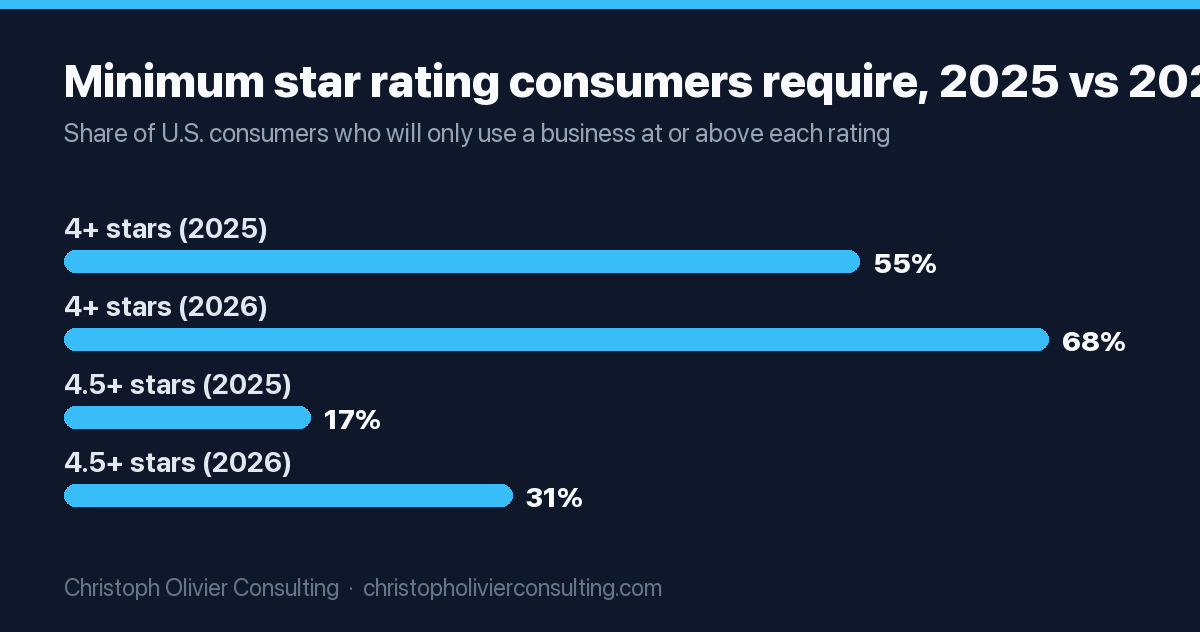
The data explains why this campaign often comes first. BrightLocal’s 2026 Local Consumer Review Survey of 1,002 U.S. adults found that 97% of consumers read reviews for local businesses, 74% look for reviews written in the last three months, and 68% will only use a business with four or more stars, up from 55% the year before. It also found that 83% of people asked to leave a review went on to leave one, and 80% say they are likely to use a business that responds to all reviews.
- Point-of-delivery review request. Ask in person when the job is done and hand over a card or show a QR code. Google lets you create a review link or QR code from your profile under Read reviews, then Get more reviews. Channel: in person. Cost: Low. KPI: reviews per completed job.
- Follow-up review email or text. Send the direct link shortly after delivery, with one reminder. Google suggests adding it to receipts and thank-you emails. Channel: email, text with consent. Cost: Low. KPI: request-to-review rate.
- Reply-to-every-review sprint. Clear your backlog, then reply within a week. BrightLocal found generic or templated replies put off 50% of consumers, so write each one. Channel: Google Business Profile. Cost: Low. KPI: response rate and time to reply.
- Monthly recency target. Set a monthly minimum so your newest review is never months old. Channel: all of the above. Cost: Low. KPI: reviews in the last 90 days.
- Reviews-to-content campaign. With permission, turn your best reviews into testimonials and ad copy. Channel: website, social. Cost: Low. KPI: conversion rate on pages that show reviews.
The compliance line you cannot cross: Google’s own help pages say offering free or discounted goods or services in exchange for reviews is “considered fake engagement and is strictly prohibited.” Google may restrict a profile that breaks this rule, including blocking new reviews or unpublishing existing ones for a set period. In the U.S., the FTC’s final rule on fake reviews, announced August 14, 2024, also bans incentives conditioned on a review expressing a particular sentiment. Ask everyone, reward no one.
Referral campaign ideas
Referral campaigns give your happiest customers and partners a simple, specific way to send you people like them. The best ones make the ask at a high point (right after a win), tell the referrer exactly who you help, and thank them every time. Referred leads tend to arrive with trust already built, which shortens the sales cycle.
- Thank-you referral program. A clear “who we help” card plus a thank-you gesture for each referral. Channel: email, in person. Cost: Low. KPI: referred leads per month.
- Double-sided referral offer. Both the referrer and the new customer get a credit on a future service. Channel: email, receipts. Cost: Low to Medium. KPI: referral codes redeemed.
- Referral partner lunch-and-learn. Host five to ten professionals who serve your buyers and teach them when to refer you. Channel: in person. Cost: Medium. KPI: partner referrals in the next 90 days.
- “Bring a friend” client event. Each client can invite one guest. Channel: in person, email invites. Cost: Medium. KPI: guests who become leads.
- Win-moment ask. Ask for a referral when a customer says thank you, such as at the final walkthrough. Channel: in person, email. Cost: Low. KPI: referrals per closed job.
One caveat: some licensed professions restrict paying for referrals. In a regulated field, check your licensing body’s rules before attaching any reward.
Local marketing campaign ideas
Local marketing campaigns make you visible to people within driving distance at the moment they are choosing a provider. Your Google Business Profile is the cheapest starting point because it shows on Search and Maps. Then add community campaigns that put your name in front of neighbors with a trackable offer.
- Google Business Profile offer or event post. According to Google’s help documentation, an offer post requires a title plus start and end dates and times, and can include a coupon code, link and terms. Posts older than six months are archived unless a date range is set. Channel: Search, Maps. Cost: Low. KPI: calls, website clicks and direction requests from the profile.
- Small Business Saturday campaign. The Saturday after Thanksgiving (November 28 in 2026). In the 2025 American Express Shop Small Impact Study, conducted by Teneo, 86% of consumers said they were likely to Shop Small that holiday season, and small business owners expected nearly 20% of their annual revenue to come from Small Business Saturday sales alone. That figure skews toward retail, so treat it as a signal of attention, not a forecast. Channel: in store, email, social. Cost: Low to Medium. KPI: same-day sales or bookings.
- Neighborhood direct mail. A postcard to the streets around your recent jobs. Channel: mail. Cost: Medium. KPI: calls using the postcard’s offer code.
- Local sponsorship with a trackable offer. Sponsor a youth team or charity run, with a unique URL or code. Channel: community. Cost: Medium. KPI: code redemptions.
- Local expert story. Pitch a short, useful local story (a seasonal checklist, a trend you see in your jobs) to the community paper. Channel: earned media. Cost: Low. KPI: mentions and referral traffic.
- Chamber or networking spotlight talk. Offer a 15-minute practical talk at your chamber or business group. Channel: in person. Cost: Low. KPI: follow-up meetings booked.
To fit these into an always-on plan, see our overview of online marketing strategies for small business.
Seasonal marketing campaign ideas
Seasonal campaigns tie your offer to a date the customer already cares about: the holidays, tax season, the start of summer, year-end budgets. The trick is to launch before the peak, not during it, so you capture bookings while competitors are still planning. Pick two or three seasonal moments per year and repeat what works.
- Holiday campaign. A gift offer or client thank-you. Our list of Christmas marketing campaign ideas has more options. Channel: email, social, in store. Cost: Low to Medium. KPI: holiday-period revenue versus last year.
- Pre-peak booking offer. HVAC tune-ups before summer, tax prep slots before the rush, lawn care contracts before spring. Channel: email, mail, Business Profile. Cost: Low to Medium. KPI: bookings by the deadline.
- Year-end “use it before it resets” campaign. Remind B2B buyers about unspent annual budgets. Channel: email, phone. Cost: Low. KPI: Q4 bookings.
- Business anniversary campaign. Celebrate your founding date with a limited offer. Channel: email, social, in store. Cost: Low. KPI: redemptions.
- Slow-season fill campaign. Offer a bundled service in your quietest month. Channel: email to past customers. Cost: Low. KPI: capacity filled in the slow month.
How to run a marketing campaign for small business in 6 steps
Run every campaign through the same six steps: choose one goal, define the audience, write the offer, pick channels, set a budget and deadline, then review the results against revenue. Using the same process each time lets you compare campaigns fairly and keep only the ones that pay back.
- Pick one goal and one KPI. “More leads” is not a goal. “30 booked assessments by March 31” is.
- Define the audience. Past customers, a radius, a partner’s list or search traffic. Specific usually converts better.
- Write the offer and the deadline. State what they get, why now, and when it ends. A real deadline is what makes it a campaign.
- Choose one or two channels. Use the channel where that audience already is. Too many channels hides what worked.
- Set up tracking before launch. Unique codes, landing pages, call tracking or a simple “how did you hear about us” field in your CRM.
- Review and decide. At the end date, compare cost to revenue, as the SBA recommends. Repeat, adjust or kill the campaign.
Common mistakes to avoid
- No end date. Without one, you cannot call a result, and the urgency in the offer is fake.
- Vanity metrics. Judge the campaign on leads, bookings and revenue, not likes.
- Too many channels. Two channels you run well beat five you run badly.
- Slow follow-up. Leads nobody calls back within a day waste the spend.
To find where your funnel leaks, our guide on how to generate more leads walks through the common bottlenecks.
A 90-day small business campaign calendar
A 90-day calendar runs one main campaign per month while keeping reviews running in the background. Start with the cheapest, fastest-payback goal (reactivation), then reviews, then new leads, so each month funds and supports the next. Adjust the order if one goal is clearly your biggest bottleneck.
| Weeks | Main campaign | Always-on | Key actions | KPI checkpoint |
|---|---|---|---|---|
| 1 to 2 | Setup | Clean customer list, create review link and QR code | Segment lapsed customers, set up tracking codes, write brief | List size and tracking live |
| 3 to 4 | Reactivation: win-back sequence | Review requests on every job | Send 3-email sequence, owner calls top accounts | Reactivated customers |
| 5 to 6 | Reviews: reply sprint + recency push | Review requests | Reply to backlog, add QR code to receipts | Reviews in last 30 days |
| 7 to 8 | Referrals: thank-you program launch | Review requests, profile post | Email referral card to happy customers, contact 5 partners | Referred leads |
| 9 to 11 | New leads: free assessment offer | Review requests, profile offer post | Launch landing page, email list, optional local search ads | Booked assessments, cost per lead |
| 12 to 13 | Review and plan next quarter | Review requests | Compare cost to revenue per campaign, pick the next seasonal push | Return by campaign |
One-page campaign brief template (with a worked example)
A one-page campaign brief forces the decisions that make a campaign measurable: goal, audience, offer, channels, budget, dates and the KPI. Fill it in before you spend anything. If you cannot complete a field, the campaign is not ready. Copy the template below and keep each brief in one shared folder.
The template
- Campaign name:
- Goal (one sentence, with a number and a date):
- Primary KPI:
- Audience: who, how many, where the list comes from
- Offer: what they get, why now
- Deadline:
- Channels (max two):
- Budget: cash and staff hours
- Tracking method: code, landing page, call tracking or CRM field
- Owner: one named person
- Review date and decision rule: what result means repeat, adjust or stop
Worked example (hypothetical)
A fictional three-technician HVAC company planning a spring push. The numbers are illustrative targets, not results.
- Campaign name: Spring Tune-Up Pre-Booking
- Goal: Book 60 cooling tune-ups for April and May by March 31.
- Primary KPI: Tune-ups booked by the deadline.
- Audience: Customers served in the last 24 months, pulled from the scheduling software.
- Offer: Priority scheduling and a fixed tune-up price for anyone who books before March 31.
- Channels: Email sequence plus a Google Business Profile offer post with matching dates.
- Budget: Existing email software plus about six hours of office staff time.
- Tracking: A booking code on the offer and a “campaign” field in the scheduling system.
- Owner: Office manager.
- Decision rule: Beat last spring’s total and repeat it in the fall for heating. Miss it and test a postcard next year.
In my experience, steady growth comes less from clever ideas and more from running one simple campaign a month and keeping the winners. If you would like a second set of eyes on which campaign to run first, you can book a consultation and we can map your next 90 days together.
Frequently asked questions
What are the best marketing campaigns for a small business?
The best campaigns match your biggest bottleneck. Reactivation emails to past customers and review request campaigns are usually the cheapest and fastest to show results. New-lead campaigns such as a free assessment offer work when your pipeline is thin. Referral and local campaigns build steadier demand over a few months. Pick one goal, one KPI and a deadline.
How much should a small business spend on a marketing campaign?
There is no single correct figure. The SBA does not prescribe a percentage of revenue. It recommends a complete cost breakdown in your plan, tracking costs once the campaign is live, and comparing marketing and sales costs to the revenue they generate. Start small, measure return per campaign and put more budget behind the campaigns that pay back.
How long should a small business marketing campaign run?
Most small business campaigns run two to eight weeks, long enough to collect results but short enough to keep a real deadline in the offer. Reactivation and review campaigns can show a signal in one to two weeks. Referral and local awareness campaigns often take longer. Set the end date and review date before launch.
Can I offer customers a discount for leaving a Google review?
No. Google's help documentation says offering free or discounted goods or services in exchange for reviews is considered fake engagement and is strictly prohibited, and Google can restrict profiles that break the rule. The FTC's 2024 rule also bans incentives conditioned on a review's sentiment. You can and should ask every customer for an honest review, without a reward.
What is a good local marketing campaign idea?
A strong starting point is a Google Business Profile offer post with set start and end dates, paired with a local partner or sponsorship that uses a trackable code. Seasonal moments such as Small Business Saturday, the Saturday after Thanksgiving, also give local businesses a ready-made reason for customers to visit. Measure calls, direction requests and code redemptions.
How do I measure if a marketing campaign worked?
Choose one KPI before launch, such as booked assessments, reactivated customers or new reviews per month. Set up tracking first with unique codes, a dedicated landing page or a campaign field in your CRM. At the end date, compare total cost, including staff time, to the revenue the campaign produced, then repeat, adjust or stop it.
More Growth Consulting guides
- Online Marketing Strategies for Small Business: A Prioritized, Budget-Tagged Plan
- How to Generate More Leads: 12 Tactics That Actually Work
- Win Back Campaign Guide: Re-Engage Lapsed Customers (With a Copyable 3-Touch Sequence)
- House Cleaning Marketing: The Recurring-Revenue Playbook
- Cybersecurity Marketing: How to Win Trust From Technical and Executive Buyers
- Media Buying: A Practical Guide to Programmatic, Direct, Models, and Fraud
- All Growth Consulting guides →