
SEO for a One-Page Website: What You Can and Cannot Rank For
Single-page website SEO explained: what a one-page site can realistically rank for, its hard limits, and the workarounds that actually move rankings.

Single-page website SEO explained: what a one-page site can realistically rank for, its hard limits, and the workarounds that actually move rankings.
Build a keyword list for SEO that stays organized: the exact columns, how to cluster and tier keywords, map one per page, and maintain the master file.
SEO keyword writing is a copy craft, not a placement chore. Learn to weave keywords and semantic terms into prose that reads naturally and still ranks.

Business marketing management explained as a repeatable loop: plan, budget, resource, execute, and measure marketing like a managed business function.

A website optimization strategy that sequences SEO, CRO, speed, and UX across your whole site, so the four levers compound instead of fighting each other.

An SEO keywords strategy that clusters terms, maps intent, prioritizes by opportunity, and assigns one cluster per page. Build the keyword map, not a list.
Build an SEO content plan that turns keyword research into a scored, clustered, dated publishing calendar. Includes a prioritization formula and a…

See what kind of channel SEO really is, where it fits in the funnel, and how it stacks up against paid, social, and email. Real 2026 numbers, no hype.
Turn a pile of SEO audit findings into a prioritized SEO recommendations report. A scoring model, section structure, and a worked example you can copy.

Build SEO marketing reports executives read. The KPIs, cadence, and the rankings-to-revenue narrative that defends your budget in the boardroom.
How to present SEO reports to clients: a delivery script that ties results to revenue, tailors the message per stakeholder, and defends a bad month.
The purpose of advertising is to move buyers through four objectives: awareness, consideration, conversion, retention. Pick one and set a measurable goal.

How to advertise a product with paid ads: pick the right channel, build creative that converts, and set a budget by stage. Real 2026 CPC and CPM numbers.

How to market your product: pin positioning, run a pre/launch/post plan, and pick the right channel mix. A practical guide for founders and product teams.

How digital marketing grows a business: the core disciplines working together, ROI to expect by channel, and a realistic payback timeline for owners.

Sales and marketing solutions explained: the six-layer stack, the integrations that matter, and how to close the loop between the two functions.
Buying marketing services for a service business? Decide what to outsource vs keep in-house, how to brief it, and which pricing model fits. Practical framework.

The categories of business marketing solutions you can buy, plus a buy-build-skip framework to assemble the right mix for your revenue stage.

An SEO campaign strategy structured by phase: milestones by month, who resources each stage, and the measurement cadence that proves ROI over 6-12 months.

The main types of advertising media compared by reach, cost, and fit, plus a framework for choosing and allocating budget across paid channels.

Different types of ads explained: search, display, video, social, native, shopping, retargeting. See what each does and which to run for your goal.

SEA advertising means search engine advertising: paid ads on Google and Bing. Here is what SEA is, how it differs from SEO and SEM, and the terms.

Search engine marketing for small business: what to spend, how to launch your first Google Ads campaign, and how to run SEM alongside SEO.

Business advertising online explained: the main digital ad channels, how each works, what it costs, and how to launch your first campaign this week.

Best advertising for small businesses, ranked by paid-channel ROI. Compare CPL, CPC and ROAS, then choose your channel by budget and goal.

The best ways to promote a small service business, ranked by real ROI, cost per lead, and payback speed. See which tactic to turn on first.

The six sales forms a service business needs: estimate, quote, proposal, order form, contract, intake. What each is and when it becomes binding.

How the sales industry is changing in 2026 (AI, rep-free buying, hybrid selling) and what 7-figure service businesses should do about it.

When to hire salespeople, who to hire first, what to pay rep #1, and how to ramp them. A practitioner playbook for 7-figure service businesses.

The four core sales approaches, consultative, transactional, solution, and relationship, and a decision framework to pick the one that fits your business.

The best sales strategies compared for service businesses: SPIN, consultative, Challenger, MEDDIC and more, plus which one to run at your deal size.

Book an SEO platform demo? Use this evaluation checklist: the questions to ask, the live tests to run on your own data, and the red flags that signal a bad buy.

20 current DIY SEO tools for 2026, free and paid, by use case: keyword research, audits, rank tracking, content, backlinks, and AI/GEO. With comparison table.

How to choose an SEO company using a 6-criteria weighted scorecard, the questions to ask, and the red vs green flags that decide it.

Optimize ecommerce content for SEO and conversion: category descriptions, product copy, buying guides, and blog. A practical playbook with a scoring model.

Tourism SEO services explained for hotels, tour operators, and DMOs: seasonality math, booking intent, local SEO, reviews, and cutting OTA commission.
SEO for professional services firms: build E-E-A-T authority, thought leadership, and service + location pages that win a long, trust-gated sales cycle.

Attorney SEO explained: real cost by practice area, the 12-month timeline, map-pack and E-E-A-T mechanics, and the bar-rule traps generic SEO ignores.

Cognitive search uses NLP, semantic understanding and vector retrieval to grasp intent, not keywords. What it is, how it works, and what it means for SEO.

The SEO requirements to hand a developer or designer before building. Copy-paste spec clauses, per-owner acceptance criteria, and a definition of done.

Digital marketing vs digital advertising: advertising is the paid slice inside marketing. See the channel split, the relationship, and when to invest in each.

SEO for startup business: when to start relative to product-market fit, what to do on no budget, and how to build ranking authority from zero domain authority.

How to find, vet, and hire a real Google SEO expert. Skills to check, red flags, portfolio tests, and what one costs by hour and project in 2026.

How to publish a website step by step: hosting, connect your domain, DNS records, propagation, and verify it is live. Beginner-friendly 2026 guide.
How to start digital marketing as a business owner: what to set up first, the channel order, budget bands, and quick wins for weeks 1, 30, and 90.

How a search engine finds results, step by step: crawling, indexing, ranking, and serving, plus what happens the moment you hit search.

How branding and SEO reinforce each other in 2026: branded search, E-E-A-T, and brand signals that move rankings. A practitioner’s playbook to build them.

How organic search engine ranking works: the signals that decide your position, how relevance and authority combine, and organic vs paid, explained.

A user-friendly website design checklist: navigation, readability, WCAG accessibility, mobile touch, and the usability metrics that prove it works.

Web design basics for business owners: layout, hierarchy, color, type, navigation, mobile, and conversion. The 7 fundamentals, with specs you can apply today.

The 10 main types of websites, what each is for, what it costs, and a simple framework to pick the right one for your business goal.

A real SEO strategy example, filled in end to end: goals, keyword targets, content plan, 12-month timeline, and lead forecast for a service business.

Do keywords in URLs help SEO? The honest answer, plus slug length, hyphen rules, and when changing a URL is worth the risk.

An SEO-ready website clears the minimum bar to compete in search. Run this 10-point readiness test to see if your site passes before you spend on content.

How to launch a website without losing rankings: the full pre-launch QA, redirect, analytics, and launch-day DNS cutover checklist, run in the right order.
See the exact HTML for SEO keywords: title tag, meta description, headings, image alt, and JSON-LD structured data. Copy-paste code, wrong vs right.
The history of marketing in six eras, from production to AI. Dated milestones, the thinkers behind each shift, and the strategic lesson for operators.
How to build a website from scratch: the ordered build sequence for business owners, domain to SEO-ready launch. Do it once, do it right.

The five SEO team roles, who does what, in-house vs outsourced per function, and the exact hire order for a 7-figure service business.
SEO tagging best practices for title, meta, headings, alt, canonical, and schema. The rule for each tag, the common mistake, and a copy-paste checklist.

Managing SEO without being an SEO: in-house vs agency, what to prioritize, reporting cadence, and how to hold a person or vendor accountable.

AI search analytics explained: the metrics, attribution, and tools to measure visibility and traffic across AI Overviews, ChatGPT, and Perplexity.

The HTML elements and attributes that matter for SEO, with correct copy-paste code: semantic tags, headings, meta, structured data, and attributes.

How blogging drives SEO: the real ranking mechanism, a test for whether a blog is worth it, publishing cadence, and how to measure blog SEO.
SEO for web designers: the build decisions that make or break rankings, the design mistakes to avoid, and how to hand off cleanly to an SEO.
How JavaScript affects Google crawling, rendering, and indexing: the two-wave process, CSR vs SSR vs SSG, hydration, and how to test what Google sees.
Ongoing SEO explained: why rankings decay when you stop, the month-by-month decline timeline, and what a retainer actually buys you.
Corporate SEO is an operations discipline, not tactics. See how governance, stakeholder sign-off, and scaling across large sites differ from SMB SEO.

What a full-service website build includes across design, dev, SEO, content, and maintenance, plus 2026 price tiers and the questions to ask before you buy.

CRM system proficiency is a behavior problem, not a software one. A practitioner playbook to drive adoption, clean data, and real usage across your team.

SEO web design is about the layout, navigation, and build choices that decide rankings. See the design decisions that help or hurt, decision by decision.

What sales management software does, the 5 tool categories (CRM, SPM, forecasting, engagement, coaching), and how to choose the right stack for your team.

On-page SEO services explained: exact deliverables, real pricing bands, red flags, and the vetting questions to ask before you buy. A buyer’s guide.
A categorized 2026 hub of the best SEO resources: blogs, free and paid tools, courses, newsletters, communities, podcasts, and AI search trackers.

Ecommerce SEO strategies at the site level: taxonomy, category vs product pages, faceted navigation control, internal linking at scale, and crawl budget.

Learn how to create a website without coding: the platform categories, the exact build steps, and whether no-code is SEO-ready for a service business.

What a customer management database needs: exact fields, table structure, build-vs-CRM, plus the data hygiene and compliance rules that keep it usable.
A complete sales and marketing plan example for a service business, filled in with real numbers, a channel budget table, and a 90-day rollout you can copy.

Landing page SEO tips for pages that must rank, not just convert. The intent test, on-page checklist, and the SEO-vs-conversion fix that keeps both.

Homepage optimization done right: messaging, above-the-fold, CTAs, internal links, and speed. What your homepage should and should not target.
Product page SEO done right. A field checklist for titles, descriptions, Product schema, images, reviews, and internal links that ranks one product page.
How to run a successful SEO test: build a hypothesis, split control vs variant, size the sample, measure lift, and avoid false positives.
SEO indexing explained: how Google crawls and indexes pages, why pages don’t get indexed, and how to check and fix indexing in Search Console.

Boost sales in a small business without more traffic. 9 revenue levers: close rate, follow-up, AOV, pricing, and retention you can pull this month.

Build a brand strategy for your small business on a budget: a 5-part framework for positioning, messaging, and visual identity, with a worked example.

The history of SEO in dated milestones: keyword stuffing, Panda, Penguin, mobile, RankBrain, BERT, and AI Overviews, and what each shift taught.
Marketing 101 for total beginners: what marketing is, the core disciplines, how they fit together, and the exact order to start in. No jargon.
Decided to buy leads? Learn the types of lead providers, how to vet one on data quality and exclusivity, and the red flags that signal a bad vendor.

Funnel visualization made practical: how to structure the data, build a funnel chart in GA4, Looker Studio, Sheets or Excel, and read stage drop-off.

Managing a sales force means running the people, not the pipeline. A founder’s system for structure, quotas, coaching, comp, and metrics that hit quota.

Commercial marketing sells products and services for profit. See how it differs from social/nonprofit marketing and from the corporate marketing function.

The history of advertising in one timeline: print, radio, TV, digital, programmatic, and AI, with dated milestones and the lesson each era teaches.
Get free B2B leads with organic tactics and free-tool tiers. Realistic timelines, monthly caps, and the exact point free stops scaling. From CO Consulting.

Funnel management is an ongoing discipline. Here is the review cadence, the stage-conversion metrics to watch, how to diagnose leaks, and who owns each handoff.
How PPC and SEO work together: the shared data loop, using paid to test SEO keywords, and how to split budget by stage. A working integration playbook.
SEO for bloggers, one post at a time: pick a keyword, optimize the post, link it, and refresh it. A repeatable loop you run on every article.

Off-page SEO for ecommerce done right: earn editorial links, digital PR, reviews, and brand mentions, then funnel authority to product and category pages.
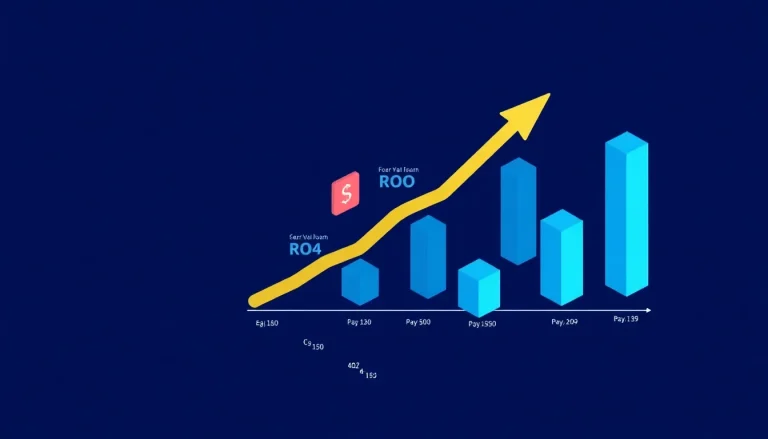
Deciding whether to invest in SEO? Run the ROI math, payback formula, and break-even before you sign. Plus the four cases where SEO is the wrong spend.
Set SEO goals that map to revenue. A practical framework to turn business objectives into SMART, dated SEO targets, with a service-business example.