
Last reviewed: October 2026

The best multi channel marketing examples share one pattern: a single idea carried across several channels, with each channel given a specific job. Coca-Cola’s Share a Coke put names on bottles, then extended them to kiosks, Facebook and a digital sign, while Spotify Wrapped turns in-app stories into social shares and city pop-ups. Starbucks ties its app, loyalty program and stores into one daily habit.
Below are 10 real campaigns, using only figures the brands or official bodies published, plus two illustrative examples for professional-service firms, a channel-role table, sequencing rules, a GA4 setup and a plan template.
What is multichannel marketing?
Multichannel marketing means reaching the same audience through more than one channel, such as email, search, social, events, direct mail or stores, as part of one coordinated effort. Each channel can run on its own tools and metrics. The goal is reach and choice: you meet buyers where they already are, instead of hoping they find your one channel.
A multichannel marketing campaign has three parts: a shared message or offer, a set of channels with defined roles, and a time window with a measurement plan. Without the shared message, you just have several unrelated campaigns running at once.
Multichannel vs omnichannel vs cross-channel marketing
Multichannel marketing uses several channels in parallel. Cross-channel marketing connects them, so an action in one channel changes what the person sees in the next. Omnichannel marketing goes further and treats every touchpoint as one continuous experience built around the customer’s history. Most firms should start multichannel, then add cross-channel links where data allows.
| Approach | How channels relate | Data needed | Typical example | Best fit |
|---|---|---|---|---|
| Multichannel | Same message on several channels, run separately | Low: per-channel metrics | A webinar promoted by email, LinkedIn and a site banner | Small teams, first coordinated campaigns |
| Cross-channel | Channels hand off: behavior in one triggers the next | Medium: shared contact IDs, CRM, retargeting lists | No-shows get a replay email and a call | Firms with a CRM and clean contact data |
| Omnichannel | One continuous experience; history follows the customer everywhere | High: unified profile across app, store, web, service | Starbucks app, Rewards and stores as one system | Large consumer brands with apps and loyalty programs |
If your channels do not share data, you are running multichannel, and that is fine. The sourced numbers on the omnichannel side are collected in these omnichannel marketing statistics.
Why multichannel marketing still matters in 2026
Buyers still split their journeys across online and offline channels, so a single-channel plan leaves most of the path uncovered. US Census Bureau data shows e-commerce made up 17.1% of seasonally adjusted US retail sales in Q2 2026. Online is growing, but the large majority of retail sales still are not online orders.
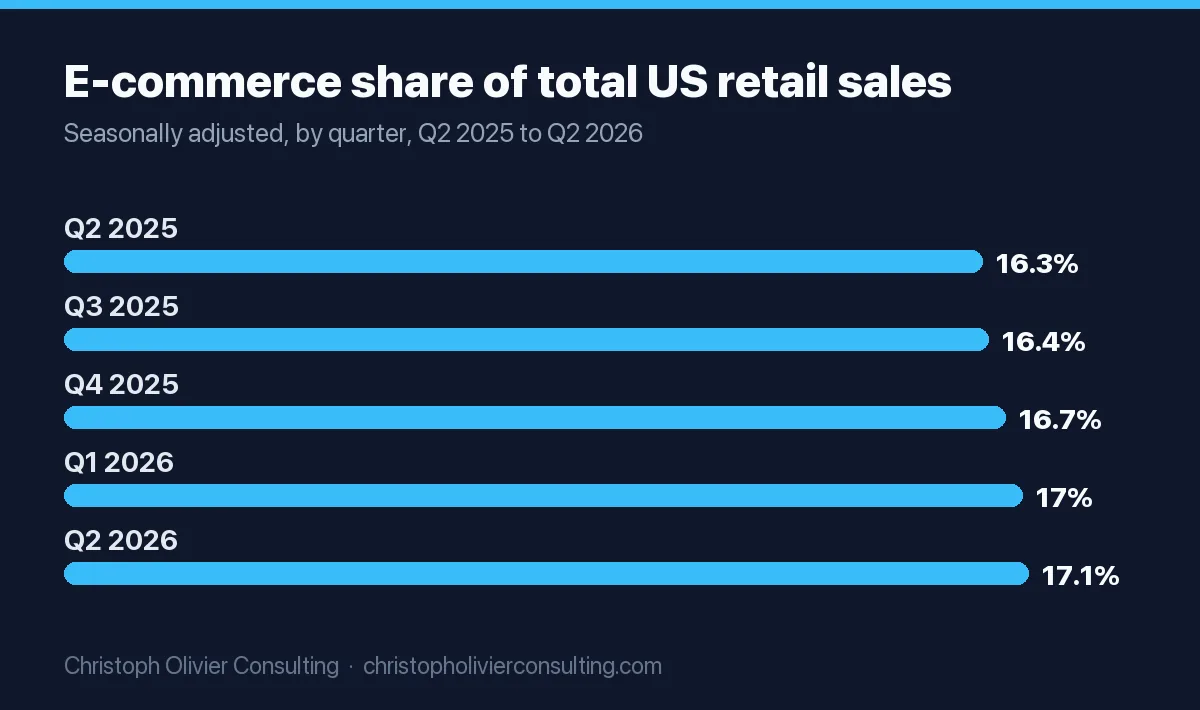
The Census Bureau’s quarterly e-commerce report puts Q2 2026 e-commerce at $340.2 billion, up 12.2% year over year, against 6.7% for total retail. Digital keeps gaining share, so you cannot ignore it. Stores, phone and in-person channels still carry most of the volume, so you cannot go digital-only either.
Service buyers split their journeys too: Google, LinkedIn, a friend’s advice, a talk, then a call. Multichannel planning puts the same message at each step.
Multi channel marketing examples from consumer brands
These seven consumer campaigns show multichannel marketing at different levels of maturity, from a packaging idea extended into digital to fully connected app ecosystems. Each example lists the channels used, the role each played and only the results the brand or an official record keeper published. Where no outcome number was published, none is given.
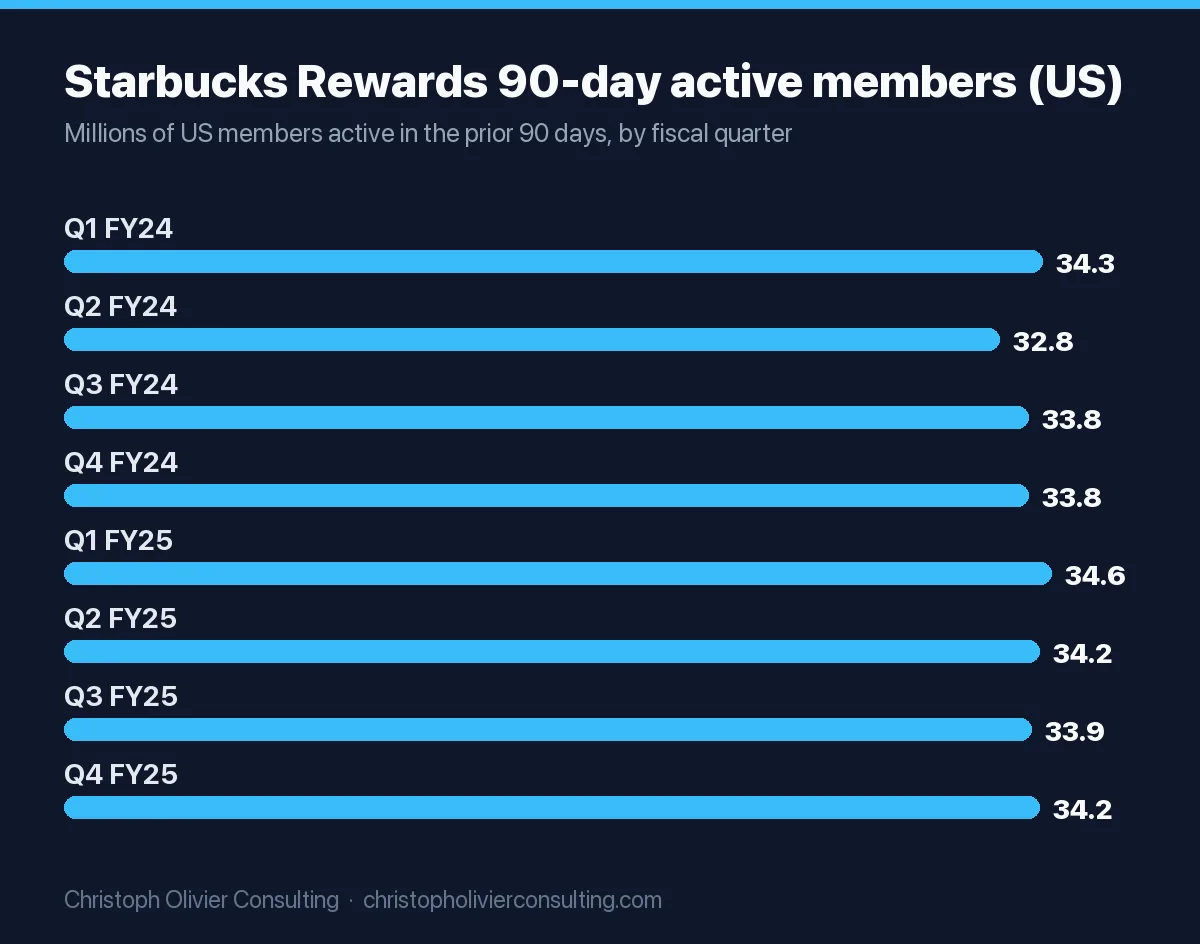
1. Starbucks: app, Rewards and stores as one loop
The app handles ordering and payment, Rewards gives people a reason to identify themselves, and the store fulfills the order. According to the Starbucks Card, Loyalty and Mobile Dashboard, Q4 FY25 figures for US company-operated stores were:
- 34.2 million 90-day active Rewards members in the US.
- Rewards members’ spend at 58% of tender dollars.
- Mobile orders at 31% of total transactions.
The lesson: loyalty is the glue. It turns anonymous visits into known customers that every channel can recognize.
2. Coca-Cola: Share a Coke
Share a Coke began in Australia, where the team replaced the logo on bottles and cans with 150 popular first names. Coca-Cola’s own history of the campaign lists the supporting channels: traveling kiosks to customize cans, a Facebook feature to send a virtual Coke, texted names shown on a Sydney digital sign, and TV. Coca-Cola says it sold more than 250 million named bottles and cans that summer, in a country of just under 23 million people. The idea later spread to more than 70 countries.
The lesson: the product was the lead channel; the rest gave people a way to act on it.
3. Spotify Wrapped
Wrapped turns a year of listening data into shareable personal stories. For 2025, Spotify’s launch post describes in-app stories, shareable cards, clips from artists, authors and podcasters, a web version and about 50 city pop-ups, from Seoul to New York. Spotify’s Q4 2025 earnings release reports more than 300 million engaged users and more than 630 million shares on social media, in 56 languages.
The lesson: owned data plus a share button turns customers into the distribution channel.
4. Domino’s AnyWare
Domino’s built its multichannel strategy around ordering. In May 2015, it let customers reorder a saved pizza by tweeting a pizza emoji, adding Twitter to a lineup that already included Samsung Smart TV, Pebble and Android Wear smartwatches, Ford SYNC in the car and voice ordering. The launch release states that Domino’s generated approximately 50% of US sales from digital channels at the end of 2014.
The lesson: a stored profile (the saved Easy Order) made each new channel a one-tap purchase, not a gimmick.
5. The Home Depot: interconnected retail
Home Depot links web and stores through four programs: buy online and ship to store, pick up in store, deliver from store, or return in store. Its annual report for fiscal 2023 states that approximately 50% of US online orders were fulfilled through a store.
The lesson: fulfillment and returns are channels too, and customers judge the brand on them.
6. Apple: Shot on iPhone Challenge
Apple invited people to post their best iPhone photos on Instagram or Twitter with #ShotOniPhone, on Weibo, or by email. Its 2019 announcement says a judging panel would pick 10 winning photos to feature on billboards in select cities, in Apple retail stores and online, and that the photographers would receive a licensing fee.
The lesson: social sourced the content; billboards and stores amplified it. The same pattern shows up in many strong social media campaigns, where customers create and paid media distributes.
7. Dove: Real Beauty Sketches
Real Beauty Sketches was an online film released in many language versions. Guinness World Records recorded it as the most viewed online video advertisement, with 124,875,719 views in 25 languages across more than 110 countries as of November 2, 2013, using data collected by Unruly.
The lesson: localization is a channel decision. One idea in 25 languages multiplied the audience without 25 campaigns.
Cross-channel and B2B marketing examples
B2B and service campaigns use fewer channels, longer timelines and more human touchpoints, but the structure is the same: one idea, assigned roles, planned handoffs. Below are three real examples from a truck maker, a software company and a language app, then two illustrative models for professional-service firms, not client results.
8. Volvo Trucks: The Epic Split
Volvo Trucks filmed Jean-Claude Van Damme doing the splits between two reversing trucks. The Drum reported in December 2013 that the film launched exclusively on YouTube on November 14, drew 6.5 million views on day one, passed 59 million views in under a month and tripled the brand’s YouTube subscribers. Facebook, Twitter and Reddit sharing carried it further, and Volvo’s PR director called it “an example of multi-level storytelling”.
The lesson for B2B: the buyers were fleet owners, but content the public wanted to share carried the message to them.
9. Salesforce: Dreamforce
Dreamforce is a multichannel B2B campaign shaped like a conference. Salesforce expected its 23rd edition to draw nearly 50,000 people to San Francisco on October 14 to 16, 2025, per its October 2025 press release. Keynotes stream on Salesforce+, its own video service, and recaps run on its newsroom.
The lesson: one flagship event can feed every channel for months. A firm can do the same with one annual seminar.
10. Duolingo: Dead Duo
In early 2025, Duolingo turned the “death” of its owl mascot into a social-led “whodunit”. Its Q1 2025 shareholder letter calls it one of its most successful marketing campaigns ever, says the company “spent practically nothing on it”, and reports 1.7 billion organic impressions and “a meaningful lift in new and resurrected users”. It gives no user number for the campaign itself.
The lesson: social started the story; the app and the community kept it going.
11. Illustrative: an estate planning firm’s seminar campaign
This is a model, not a client case. A three-partner estate planning firm runs one idea, “What changes when you turn 60”, for six weeks. Partners post on LinkedIn, a landing page and Search ad capture local searches, an email goes to past clients and referral partners, and a local CPA co-hosts the seminar. Attendees get a review-meeting offer; non-attendees get the recording.
12. Illustrative: a B2B consulting firm’s benchmark report
Also a model. A consulting firm publishes a short benchmark report from its own anonymized project data. It is gated on the website, summarized on LinkedIn, pitched to one trade publication, discussed in a webinar and used by partners to reopen dormant clients. Which of these fit your deal size depends on your B2B sales channels.
What the best multichannel marketing campaigns have in common
The strongest examples share four traits: one central idea, a clear job for each channel, a mechanism that links channels together (a profile, a hashtag, a saved order, an event) and a measurable action at the end. Brand size matters less than these four. A small firm can copy the structure even if it cannot copy the budget.
| Example | Channels | Linking mechanism | Published result |
|---|---|---|---|
| Starbucks | App, Rewards, stores, card | Rewards account | 34.2M 90-day active US members (Q4 FY25) |
| Share a Coke | Packaging, kiosks, Facebook, digital sign, TV | Names | 250M+ named bottles and cans sold in Australia |
| Spotify Wrapped | App, social, web, pop-ups, artist clips | Personal data stories | 300M+ engaged users, 630M+ shares (2025) |
| Domino’s AnyWare | Twitter, TV, watches, car, voice, web | Saved Easy Order | About 50% of US sales digital (end of 2014) |
| Home Depot | Web, app, stores, delivery | Fulfillment programs | About 50% of US online orders fulfilled via a store (FY2023) |
| Apple | Instagram, Twitter, Weibo, billboards, stores | Hashtag | Not published |
| Dove | Online video, social, press | One film in 25 languages | 124.9M views by Nov 2013 |
| Volvo Trucks | YouTube, social, press, search | One film | 59M+ YouTube views in under a month |
| Dreamforce | Event, streaming, news, social, sales | Event content | About 50,000 expected attendees (2025) |
| Duolingo | Social, app, community | Mascot story | 1.7B organic impressions |
Notice what is missing: almost none of these brands published revenue from a single campaign. Be wary of articles claiming precise ROI for famous campaigns without linking to the brand’s own figures.
How to plan a multichannel marketing campaign
Plan a multichannel marketing campaign by starting from one audience and one action, then choosing the fewest channels that cover how that audience researches and buys. Give each channel a single job, decide the order people meet them in, and set measurement before launch. Three well-run channels usually beat six neglected ones.
- Pick one audience and one action. “Owners aged 55 to 70 book a planning call” is a target. “Grow awareness” is not.
- Write the central idea in one sentence a prospect could repeat.
- Find where the audience already pays attention, using CRM referral sources, top landing pages and past event data.
- Assign each channel one job from the table below. No clear job, no channel.
- Build the linking mechanism: a landing page, offer, registration or CRM field every channel feeds.
- Sequence the touches and set frequency caps.
- Set up measurement in GA4 and your CRM before launch.
- Review weekly and cut the weakest channel at the midpoint if the data is clear.
| Funnel stage | Channel job | Channels that often fit service firms | What to measure |
|---|---|---|---|
| Awareness | Get the idea in front of new people | LinkedIn posts, PR, podcasts, short video, paid social | Reach, new visitors, branded searches |
| Consideration | Give proof and depth | Website guides, webinars, case write-ups, search results | Engaged sessions, registrations, time on key pages |
| Conversion | Make the next step easy | Booking page, Google Search ads, email with a single call to action, phone | Calls booked, form fills, key events in GA4 |
| Retention and referral | Keep clients close and make referrals easy | Client email, events, partner co-marketing, reviews | Repeat work, referrals, review count |
If budget is tight, start with the campaign formats in this list of small business marketing campaign ideas and add channels only once the first two work.
Frequency and sequencing: what to send, when
Sequence channels from broad to personal: reach first, proof second, the direct ask last. Space touches so each one adds something new, and cap how often one person sees the message in a week. There is no universal “right number” of touches; the right number is the one your own response and unsubscribe data supports.
A sensible six-week pattern for a service firm looks like this:
- Weeks 1 to 2, awareness: partner posts, one site article, a PR pitch. No hard ask.
- Weeks 2 to 4, consideration: promote the webinar or guide by email and retargeting, with one reminder.
- Weeks 4 to 5, conversion: a direct invitation to book, from a named person, to people who engaged.
- Week 6, follow-up: recording to non-attendees, personal outreach to engaged contacts.
Two rules prevent most problems. Suppress people who already converted, because an ad for something they just bought signals disconnected channels. And keep the message identical in substance across channels, so each touch reinforces the last.
How to measure a multichannel campaign in GA4
In GA4, measure a multichannel campaign by tagging every link with UTM parameters, marking the actions that matter as key events, and reading results under the data-driven attribution model. Data-driven attribution spreads credit across the touchpoints in each path based on your own account’s data, rather than giving everything to the last click.
According to Google’s GA4 attribution documentation, the reporting models now available are data-driven, paid and organic last click, and Google paid channels last click. The first click, linear, time decay and position-based models were removed in November 2023. Google also notes that conversions can be reattributed for up to 7 days after they occur, so do not judge a campaign on the first day’s numbers.
- Use one UTM scheme everywhere: utm_source for the platform, utm_medium for the channel type, utm_campaign for the campaign.
- Mark booking forms, call clicks and webinar registrations as key events.
- Compare data-driven with paid and organic last click. Channels that gain credit under data-driven are usually your assisting channels.
- Log offline touches GA4 cannot see (seminars, referrals, calls) in your CRM, and ask every new client how they found you.
Attribution models are estimates, not proof. Use them to compare channels, and confirm big decisions with a simple test such as pausing one channel in one region. The wider reporting setup is covered in this guide to digital marketing analytics.
Multichannel marketing campaign plan template
A multichannel campaign plan fits on one page. It names the audience, the action, the central idea, each channel’s job, the sequence, the frequency cap and the measurement. If you cannot fill in every line below, the campaign is not ready to launch. Copy it and share it with everyone who runs a channel.
| Field | What to write | Example (illustrative) |
|---|---|---|
| Campaign name | Used in every UTM tag | exit-ready-2026 |
| Audience | Who, in one line | Owners of service businesses planning an exit within 5 years |
| Action | The one thing you want them to do | Book a 30-minute planning call |
| Central idea | One repeatable sentence | “Your exit is a marketing project, starting now” |
| Channels and jobs | Each channel with a single job | LinkedIn: awareness. Webinar: proof. Email: invite. Search ads: capture. |
| Linking mechanism | What ties the channels together | One landing page and one registration form |
| Sequence and dates | Week-by-week plan | 6 weeks, webinar in week 4 |
| Frequency cap | Maximum touches per person per week | 2 emails, ads capped in the platform |
| Measurement | Key events, model, CRM fields | GA4 data-driven, “source” field in CRM |
Pre-launch checklist:
- Every link carries UTM tags with the same campaign name.
- The landing page states the central idea in its headline.
- Key events are firing in GA4 (test each one).
- Existing clients are suppressed from acquisition ads.
- A midpoint review is in the calendar.
- Follow-up scripts exist for people who engage but do not book.
Common multichannel marketing mistakes
The most common mistakes are running too many channels for the team’s capacity, changing the message from channel to channel, and judging each channel only on last-click conversions. Each one makes a sound campaign look like a failure, or hides a weak one. Fix the plan, not the channel mix, first.
- Channel sprawl. Three new channels in one quarter usually means none get done well.
- Different messages per channel. If LinkedIn says “succession” and email says “tax savings”, prospects meet two firms.
- No linking mechanism. Without a shared page, offer or CRM field, you cannot see which channels worked together.
- Last-click bias. Awareness channels rarely get the final click; cutting them can shrink the pipeline months later.
In my experience, most professional-service firms get further with two or three channels run well around one idea per quarter than by trying to be everywhere. If you want a second opinion on your mix, you can book a consultation.
Frequently asked questions
What are some examples of multi channel marketing?
Well-documented examples include Coca-Cola's Share a Coke (named bottles plus kiosks, Facebook and TV), Spotify Wrapped (in-app stories, social sharing and city pop-ups), Starbucks (app, Rewards and stores), Domino's AnyWare (ordering by Twitter, smart TV, smartwatch and car), Home Depot's buy online, pick up in store programs, and Volvo Trucks' Epic Split film, which launched on YouTube and spread through social and press.
What is the difference between multichannel and omnichannel marketing?
Multichannel marketing runs the same message on several channels, often managed separately. Omnichannel marketing connects those channels into one experience, so a customer's history follows them from app to store to email. Multichannel needs only per-channel data; omnichannel needs a unified customer profile. Most small and mid-sized firms start multichannel and add connections as their CRM data improves.
What is a cross channel marketing example?
A cross-channel example is any campaign where an action in one channel changes what happens in the next. Domino's let customers tweet a pizza emoji to trigger a saved order, and Home Depot lets people buy online and pick up or return in a store. For a service firm, sending a replay email and a follow-up call to webinar no-shows is a simple cross-channel flow.
How many channels should a multichannel marketing campaign use?
Use the fewest channels that cover how your audience actually researches and buys. For most professional-service firms that means two to four: often the website, Google Search, LinkedIn and email, plus an event or referral partner. Each channel should have one clear job. Adding channels your team cannot run well usually weakens the whole campaign.
How do you measure a multichannel marketing campaign?
Tag every link with consistent UTM parameters, mark bookings, calls and registrations as key events in GA4, and review results under the data-driven attribution model, which spreads credit across touchpoints. Google removed first click, linear, time decay and position-based models in November 2023. Track offline touches such as seminars and referrals in your CRM, and ask new clients how they found you.
What is a multichannel marketing campaign plan?
It is a one-page plan naming the audience, the single action you want, the central idea, each channel's job, the week-by-week sequence, a frequency cap and the measurement setup. It also names the mechanism that links channels, such as one landing page or registration form. If any line is blank, the campaign is not ready to launch.
More Growth Consulting guides
- Demand Capture vs Demand Creation
- Go-to-Market Strategy Playbook 2026
- Marketing Operations Manager: What They Actually Do
- Tree Service Marketing: Cost and ROI by Channel (2026)
- Online Marketing Consultants: 2026 Costs, Comparisons and How to Choose
- Business Marketing Management: How to Run Marketing Like a Managed Function
- All Growth Consulting guides →